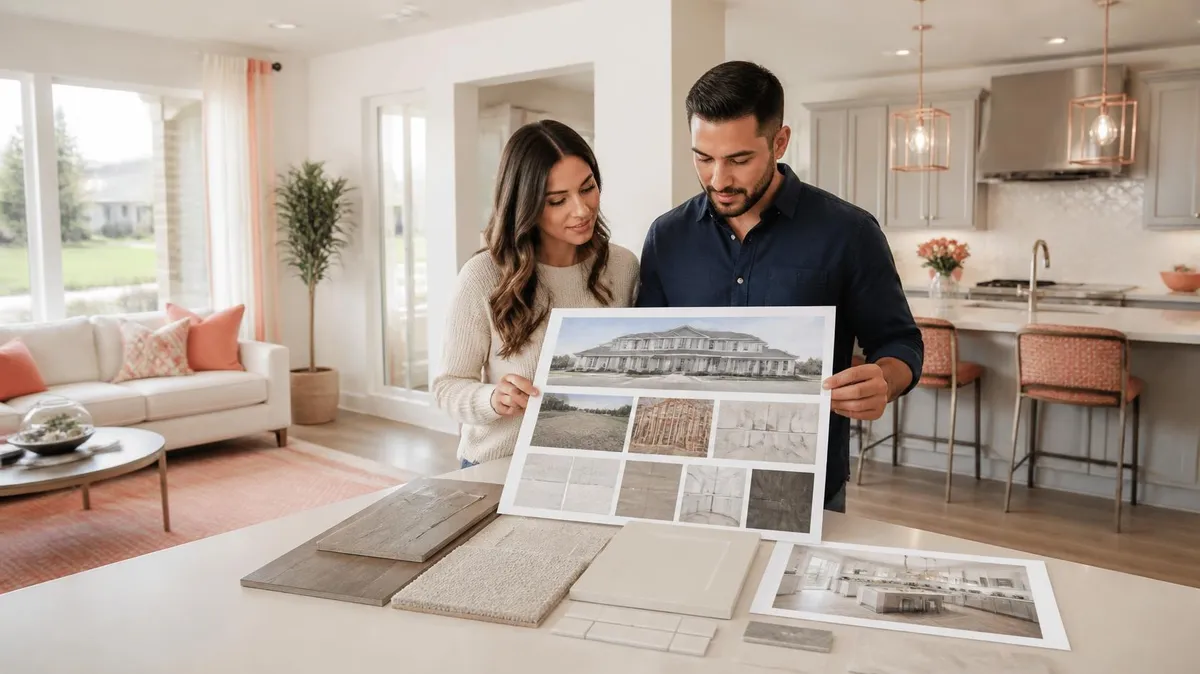
What Does “Starting From” Mean in New Construction Pricing?
What Does “Starting From” Mean in New Construction Pricing?
You're scrolling through new construction communities and see:
Homes starting from $349,990!
Perfect.
That's in your budget.
Then you visit the builder, pick the floor plan you liked online and discover your version is closer to $425,000.
Wait.
What happened to $349,990?
Welcome to one of the most important phrases in new construction:
"Starting from."
The starting price can be useful for comparing builders, but it may not represent the final price of the home you actually want.
Here's why.
What Is a Builder's Starting Price?
A starting price is generally the entry price for a particular home, floor plan, product series or community based on the builder's specified standard configuration.
Think of it as the beginning of the pricing conversation.
Not necessarily the final number.
Your actual price can change depending on the home, lot, options and builder pricing.
What Is the Base Price?
The base price typically represents the builder's price for a home with specified standard features before optional additions and certain premiums.
But builders don't all structure pricing exactly the same way.
Always ask:
"What exactly is included in this base price?"
That's more useful than assuming.
Why Can the Final Price Be So Much Higher?
Several things can increase the price.
Let's look at the common ones.
1. Lot Premium
Not every lot costs the same.
A builder may charge additional money for certain homesites.
Possible premium lots could include:
Cul-de-sac
Larger lot
Corner
Water view
Greenbelt
No rear neighbor
Other desirable location
For example:
Base price: $350,000
Lot premium: $15,000
You're already at:
$365,000
before choosing upgrades.
2. Elevation
The exterior style or elevation you choose may affect the price.
Different elevations may include variations involving:
Brick
Stone
Siding
Roofline
Porch
Architectural details
The exterior you fell in love with on the website may not be the standard elevation.
Ask.
3. Structural Options
Now we start changing the actual house.
Depending on the builder and floor plan, structural options might include:
Additional bedroom
Additional bathroom
Extended patio
Larger garage
Home office
Alternative kitchen configuration
Expanded living space
Other floor-plan changes
These can add thousands to the price.
4. Design Center Upgrades
Then comes the fun part.
Or dangerous part, depending on your budget.
You may choose upgrades involving:
Flooring
Cabinets
Countertops
Backsplash
Lighting
Fixtures
Hardware
Appliances
Bathroom finishes
A few upgrades may be manageable.
A lot of upgrades can move the price significantly.
5. Model Home Features
This is where buyers can get confused.
You walk into the model and say:
"I want this floor plan."
But the model may contain numerous upgrades.
That beautiful model could include upgraded:
Floors
Cabinets
Counters
Lighting
Built-ins
Appliances
Patio
Landscaping
Structural options
Ask the salesperson:
"Approximately how much in upgrades does this model contain?"
And:
"Which features I'm seeing are standard?"
6. Builder Pricing Can Change
Builder prices aren't necessarily fixed forever.
Pricing can change based on:
Community
Construction costs
Inventory
Demand
Sales strategy
Specific homes
Other market factors
The price you saw online previously may not be the current price.
Verify directly before building your budget around it.
7. Inventory Homes May Be Priced Differently
Here's where things get interesting.
An inventory home may already contain:
Lot premium
Structural options
Design selections
The builder may list one total price for that particular home.
And sometimes the builder may offer incentives to move completed inventory.
That means an inventory home with upgrades could occasionally be more attractive financially than recreating the same house from an earlier stage.
Compare both.
Example: How a $350,000 Home Becomes $420,000
Let's say the advertised starting price is:
Base price: $350,000
Then you select:
Lot premium: +$12,000
Elevation: +$5,000
Covered patio: +$8,000
Structural options: +$15,000
Flooring: +$12,000
Kitchen upgrades: +$10,000
Other design options: +$8,000
Now your total is:
$420,000
Nothing necessarily went wrong.
You simply aren't buying the base version anymore.
This Is Why I Ask for the Real Price Early
If your maximum comfortable budget is $400,000, I don't want you emotionally committed to a floor plan that starts at $395,000 before we've even added the lot.
Instead, we work backward.
If your maximum target is $400,000, maybe we need a base price low enough to leave room for:
Lot
Structural options
Essential upgrades
That's a much safer way to shop.
Starting Price vs. Monthly Payment
Here's another mistake:
The buyer focuses entirely on the final sales price.
But we also need to understand what the home will cost each month.
A new construction payment may include:
Principal
Interest
Property taxes
Homeowners insurance
Mortgage insurance when applicable
And when budgeting, remember:
HOA
Other recurring property expenses
A $400,000 new home in one community may have a different monthly cost from a $400,000 home somewhere else.
Property Taxes Can Change the Picture
This is especially important in Houston-area new construction.
Don't look at an incomplete home's current tax bill and assume that's what you'll pay once the home is completed and assessed.
The current tax information may reflect land or partial construction.
Ask your lender to use a reasonable estimate for the completed property.
Don't Forget the MUD
Some Houston-area new construction communities are located within Municipal Utility Districts.
A MUD may levy taxes that contribute to the total property-tax rate.
When comparing communities, ask for the applicable total tax information.
A lower home price doesn't automatically mean a lower payment.
Builder Incentives Can Change the Math
Now let's say your $420,000 home comes with a builder incentive.
Maybe the builder offers assistance toward:
Closing costs
Discount points
Mortgage-rate incentive
Temporary buydown
That can make the financing attractive.
But don't subtract a $20,000 incentive from the sales price in your head unless it is actually structured as a price reduction.
A $20,000 closing-cost or financing incentive isn't necessarily the same thing as buying the house for $20,000 less.
Ask Where the Incentive Goes
This is important.
If a builder advertises:
"$20,000 toward closing!"
ask exactly how it can be used.
Depending on the offer and financing, it may apply toward certain eligible:
Closing costs
Prepaids
Discount points
Rate strategies
There may also be limits.
Talk to the lender.
Can You Negotiate the Starting Price?
Potentially, but builders may structure negotiations differently from resale sellers.
A builder may prefer to offer:
Incentives
Financing assistance
Inventory discounts
Upgrades
rather than reduce a base price.
Why?
Recorded sales prices can affect future comparable sales in the community.
That doesn't mean builders never reduce prices.
It means you should look at the entire deal, not just one number.
Don't Forget What You'll Buy After Closing
Your builder price may still not include everything you need.
Possible post-closing expenses include:
Refrigerator
Washer and dryer
Blinds
Gutters
Furniture
Landscaping additions
Storage
Other household items
Keep cash available.
The Best Question to Ask the Builder
Instead of:
"What's the starting price?"
ask:
"What would this home realistically cost with the lot and options I'm considering?"
Then ask for the numbers in writing when available.
That's the price we can actually use for planning.
Ask for Three Numbers
When comparing new construction, I like to identify:
Number 1: Base Price
Where the floor plan begins.
Number 2: Realistic Build Price
Base + lot + structural options + expected upgrades.
Number 3: Total Monthly Cost
Mortgage + estimated taxes + insurance + applicable mortgage insurance, while also budgeting for HOA and other recurring costs.
Number three is the one you live with every month.
Compare Inventory Before Building
Before signing to build, ask:
"Do you have any inventory homes with this floor plan?"
You may find one with many of the upgrades you wanted already included.
Then compare:
Inventory price + incentives
versus
Build price + options + incentives
You may be surprised which one wins.
Don't Let the Model Home Set Your Budget
The model's job is to make you fall in love.
Your budget's job is to make sure you still love the house after the first mortgage payment.
Keep those jobs separate.
Final Thoughts
When a builder says:
"Starting from $349,990"
think:
"Okay. That's where the conversation starts."
Then calculate:
Base Price
+ Lot
+ Elevation
+ Structural Options
+ Design Upgrades
= Actual Home Price
Then add:
Taxes + Insurance + Financing + HOA + Other Costs
Now you know what the home actually costs.
About Marysol Calvillo
I'm Marysol Calvillo, a real estate broker helping buyers navigate new construction throughout Katy, Cypress, Hockley and the greater Houston area.
I help buyers compare builder base prices, lot premiums, upgrades, incentives, tax rates and financing so they understand the real cost before signing a builder contract.
Call to Action
Found a Houston-area new construction home advertised at a price that looks perfect? Before you fall in love with the model, let's calculate the realistic price with the lot, upgrades, taxes, insurance and financing so you know whether the home truly fits your budget.