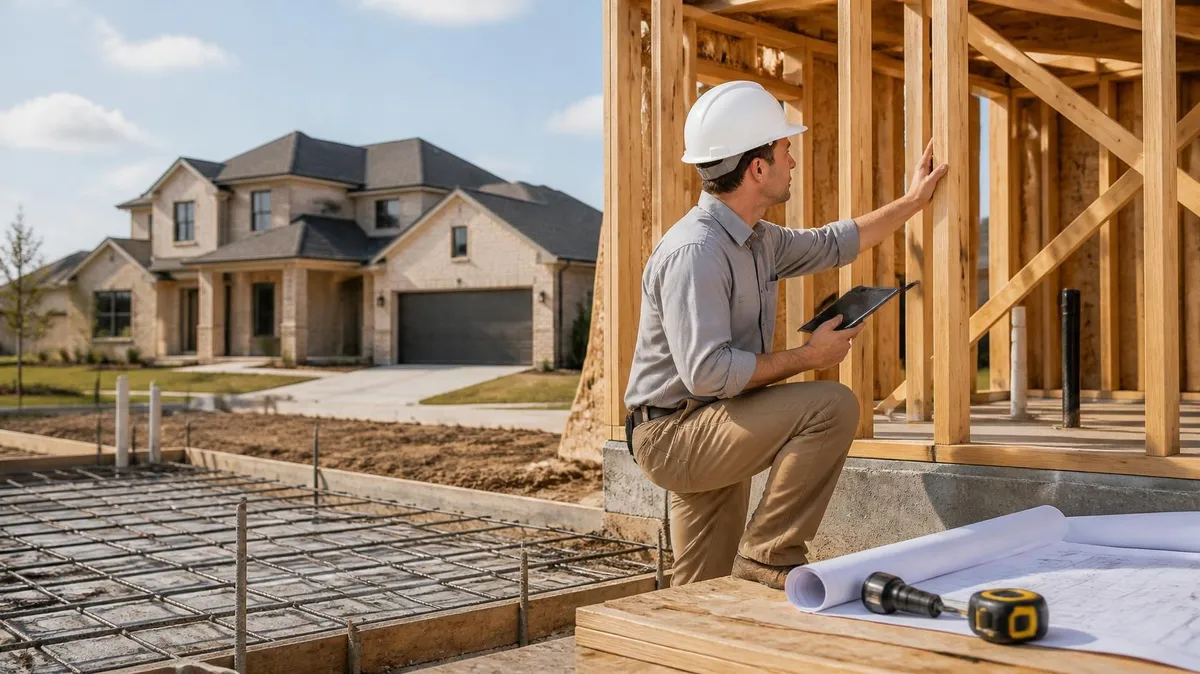
New Construction Home Inspection in Houston: Why the Builder’s Inspector Isn’t Enough
New Construction Home Inspection in Houston: Why the Builder’s Inspector Isn’t Enough
If you’re buying a new construction home in Houston, you’ll hear this from almost every builder: “Don’t worry, our homes are inspected.”
It’s true. The city inspects for code, and builders have their own quality inspectors. But the builder pays those inspectors, and their job is to keep construction moving.
A third-party home inspector works for you. Their only job is to find problems before you close. As a Houston realtor who works with new construction buyers, I recommend it on every home, every time.
What a Third-Party Inspection Found on a Brand-New Home
One of my clients is building a new home in the Houston area. They almost skipped the third-party inspection because of the cost. I convinced them to do it, and they’re very glad they did.
The inspector found that the roof was installed badly. Here in Houston, with our storms and hurricane season, that’s a serious problem. A bad roof install can lead to:
Shingles lifting or blowing off in the first strong storm
Water getting under the shingles and rotting the roof decking
Attic leaks, wet insulation, mold and stained ceilings
A manufacturer’s warranty that may not cover you if the roof wasn’t installed to spec
Insurance claim problems if damage traces back to poor installation
Another client’s drains kept backing up in a brand-new house. Construction debris had been flushed down the toilets and drains instead of being cleaned up.
What Is a Three-Phase New Construction Inspection?
Phase 1: Pre-pour (foundation) inspection. Before the concrete is poured, the inspector checks the forms, steel reinforcement and under-slab plumbing. Once the slab is poured, none of it can be seen again.
Phase 2: Pre-drywall inspection. This is the most important one. Framing, plumbing, electrical, HVAC, windows and insulation are all exposed. Once the sheetrock goes up, everything is hidden.
Phase 3: Final inspection. Before closing, the inspector checks the finished home so you can get repairs on the punch list before you sign.
Common Problems Third-Party Inspectors Find in New Homes
AC ducts disconnected in the attic
Missing or compressed insulation
Missing hurricane straps or fasteners
Missing flashing around windows and doors
Plumbing leaks and unsealed penetrations
Electrical issues
Poor grading that sends water toward the foundation
Roofing installed outside the manufacturer’s requirements
Tips Before You Hire an Inspector
Hire a TREC-licensed professional inspector with new construction experience.
Check your builder contract for rules on inspection access. Some builders limit when inspectors can visit.
Schedule the pre-drywall inspection early. Builders move fast, and the window can be just a few days.
Send repair requests in writing with the inspection report attached.
Is a Third-Party Inspection Worth the Cost?
A three-phase inspection usually costs a few hundred dollars per phase. Fixing a roof, a foundation drainage problem or mold after closing can cost thousands. And this applies to every type of home: new construction, a builder inventory home or a pre-owned home.
Frequently Asked Questions
Do I need a home inspection on new construction in Texas?
It isn’t required, but it’s strongly recommended. City inspections check minimum code, and builder inspectors are paid by the builder. A third-party inspector works only for you.
When should I schedule a pre-drywall inspection?
After framing, plumbing, electrical and HVAC rough-ins are done, but before insulation is covered and drywall goes up. Ask your builder for the timeline as early as possible.
Can I do a third-party inspection on a builder inventory home?
Yes. Even if the home is finished, a final inspection can find problems before closing.
Buying New Construction in Houston?
I help buyers with new construction homes in Katy, Cypress, Spring, The Woodlands, Conroe, Tomball, Pearland, Sugar Land, Richmond, Fulshear and across Greater Houston.
This article is general information, not legal advice.