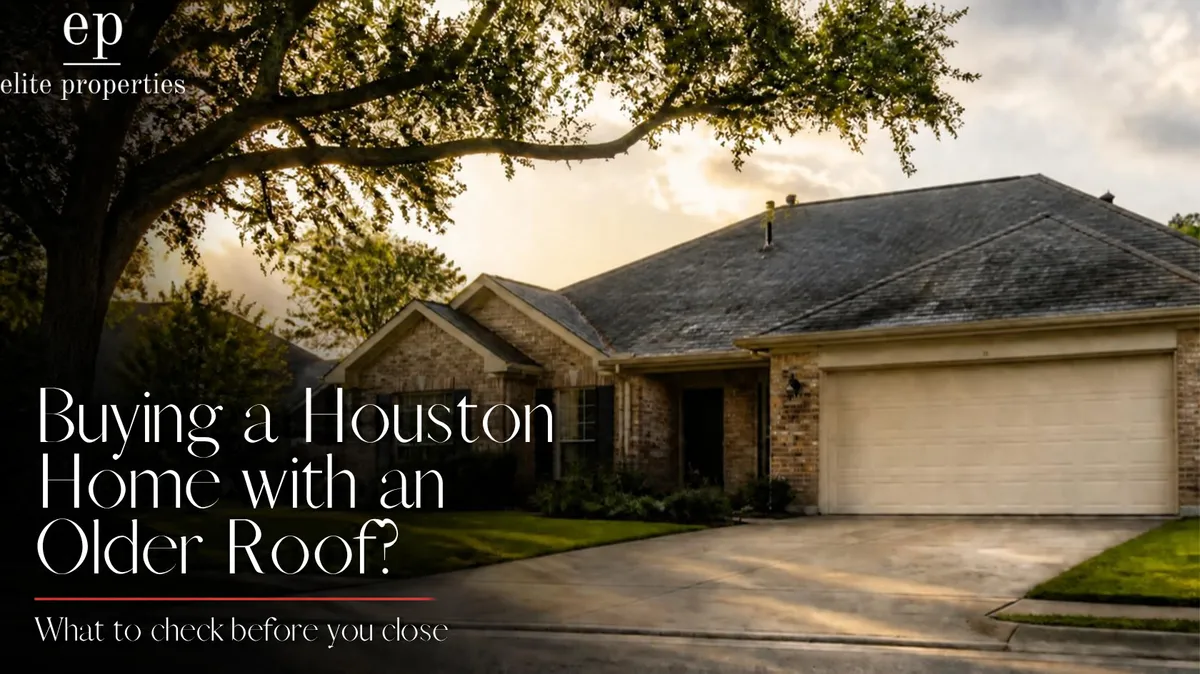
How Old Is Too Old for a Roof When Buying a Houston Home?
How Old Is Too Old for a Roof When Buying a Houston Home?
You found a house you love.
Great location.
Beautiful kitchen.
The floor plan works.
Then you ask:
"How old is the roof?"
The answer:
"About 17 years."
And suddenly you're wondering if you should run.
An older roof is something Houston-area buyers should take seriously.
But roof age alone doesn't tell us whether you should or shouldn't buy the house.
We need to look at the roof's condition, material, repair history, inspection findings, insurance implications and your future replacement budget.
Let's break it down.
Is There an Age When a Roof Is Automatically Too Old?
There isn't one universal age that makes every roof "too old."
Roof life expectancy varies depending on factors such as:
Roofing material
Installation
Weather exposure
Ventilation
Maintenance
Storm damage
Previous repairs
Two roofs installed in the same year may not be in the same condition today.
That's why I don't want buyers making a decision based solely on a date.
Why Roof Age Matters in Houston
Houston roofs deal with plenty.
Think:
Extreme summer heat
Strong thunderstorms
Wind
Hail
Heavy rain
Tropical weather
That exposure can affect roofing materials over time.
So when we're looking at an older Houston-area home, the roof deserves attention.
Ask When the Roof Was Replaced
Start with a simple question:
When was the roof installed or last replaced?
Then ask whether documentation is available.
Useful information may include:
Installation invoice
Contractor information
Permits when applicable
Warranty documents
Repair receipts
Insurance claim information when available
"I think it was replaced around 2012" isn't quite as useful as an actual invoice.
What If the Seller Doesn't Know the Roof Age?
That happens.
Maybe the seller purchased the property after the roof was installed.
Maybe records aren't available.
Your inspector can evaluate visible roof conditions, but an inspection doesn't necessarily provide an exact installation date.
If roof age is important for insurance or your purchasing decision, additional research or evaluation may be appropriate.
What Should the Home Inspector Look For?
A home inspector may identify visible conditions such as:
Damaged or missing shingles
Deteriorated roofing materials
Flashing concerns
Signs of previous repairs
Visible moisture intrusion
Attic evidence of leakage
Other roof-related deficiencies
If significant concerns are identified, further evaluation by a qualified roofing professional may make sense.
An Old Roof Isn't Necessarily a Bad Roof
This is important.
An older roof may still be functioning.
A newer roof can also have problems if it was poorly installed or damaged.
Age gives us context.
Condition gives us more information.
But Remaining Life Matters
Even if an older roof isn't currently leaking, ask yourself:
How soon might I reasonably need to budget for replacement?
If you're purchasing a house and using nearly every dollar available for closing, an expensive roof replacement shortly afterward could be difficult.
This is where your post-closing reserves matter.
Roof Age Can Also Become an Insurance Issue
This is something buyers sometimes don't discover until late in the transaction.
A roof isn't only an inspection issue.
It can also be an insurance issue.
Insurance companies establish their own underwriting guidelines, and roof age, material and condition can affect available coverage or eligibility.
That's why I don't recommend waiting until the last minute to get a homeowners insurance quote.
Ask How the Roof Is Covered
Don't look only at the annual insurance premium.
Ask how the roof is covered.
Depending on the policy and circumstances, roof losses may be settled using different methods.
Two terms homeowners should understand are:
Replacement Cost
Generally intended to reimburse covered replacement costs subject to policy terms, limits, deductibles and applicable conditions.
Actual Cash Value
Generally takes depreciation into account when determining the value of covered damaged property.
Those differences can matter significantly with an older roof.
Read the actual policy and ask your insurance professional how roof coverage works.
Don't Forget the Deductible
Texas homeowners should also pay attention to deductibles.
Your policy may have different deductibles depending on the type of covered loss.
Don't simply ask:
"How much is the policy?"
Also ask:
"What are my deductibles?"
and
"How would my roof be covered?"
Could an Older Roof Make Insurance More Expensive?
Potentially.
Insurance pricing and eligibility depend on numerous underwriting factors, and roof characteristics can be among them.
Different insurers may treat the same property differently.
That is another reason shopping coverage before closing can be valuable.
Can You Negotiate Because the Roof Is Old?
Potentially, but age alone doesn't automatically mean the seller owes you a new roof.
Suppose the roof is older but functional and there is no evidence of an active defect.
That's different from an inspection finding significant damage or active leakage.
Depending on your contract, inspection findings and negotiations, possible approaches might include:
Seller completing an agreed repair
Negotiating an allowable seller contribution
Negotiating price
Another agreed solution
Continuing with the purchase as-is
The seller has to agree to negotiated changes.
What If the Roof Needs Replacement?
Get more information.
If appropriate within your contractual timeline, obtain an evaluation or estimate from a qualified roofing professional.
Now we're no longer negotiating around:
"The roof looks old."
We're discussing actual condition and potential cost.
That's a much better conversation.
What If the Seller Offers to Replace It?
Good—but ask questions.
Find out:
Who will perform the work?
What materials will be used?
What scope is included?
Will documentation be provided?
Is there a warranty?
Is the warranty transferable?
"Seller will replace roof" sounds simple.
The details still matter.
What If the Seller Filed an Insurance Claim?
If prior roof damage or an insurance claim is disclosed or otherwise known, ask for available documentation and discuss relevant insurance questions with your insurance professional.
Don't assume a previous claim automatically means there is a problem.
But don't ignore available information either.
Should You Walk Away From a House With an Old Roof?
Not automatically.
Ask:
What is the actual condition?
What does the inspector say?
Does a roofer need to evaluate it?
Can I obtain acceptable insurance?
How is the roof covered under the proposed policy?
What are the deductibles?
Can I financially handle replacement if it becomes necessary?
Do the purchase terms still make sense?
Those answers are more useful than the roof's birthday by itself.
Newer Roof Doesn't Mean Stop Paying Attention
Even when the seller says:
"New roof!"
I still want to know:
When was it installed?
Who installed it?
Are documents available?
Was it a full replacement or repair?
What does the inspector observe?
Marketing language isn't a substitute for due diligence.
Final Thoughts
So, how old is too old for a roof when buying a Houston home?
There isn't one magic number.
Instead, evaluate:
Age + Condition + Documentation + Insurance + Replacement Cost + Your Budget
An older roof doesn't automatically make a home a bad purchase.
But it is something you want to understand before you own the house.
Especially in Houston, the roof can affect more than future maintenance.
It may also affect homeowners insurance and your overall cost of ownership.
About Marysol Calvillo
I'm Marysol Calvillo, a real estate broker helping buyers throughout Katy, Cypress, Hockley, 77084, 77095 and the greater Houston area understand the complete cost of buying and owning a home.
My background in both real estate and insurance allows me to help clients recognize questions they should be asking about the property as well as the insurance side of homeownership.
Call to Action
Buying a Houston-area home with an older roof? Before you make the decision based on age alone, let's look at the inspection, condition, insurance implications and potential future cost so you can understand what you're actually buying.