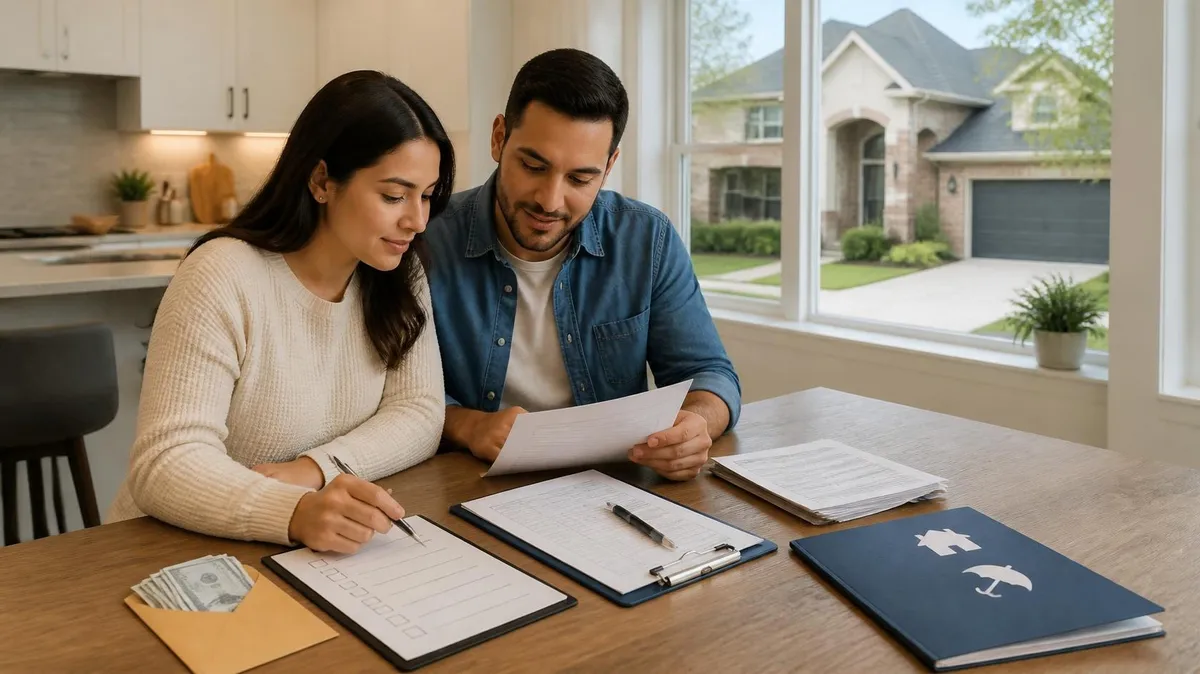
What Happens During the First Days After Going Under Contract in Texas?
What Happens During the First Days After Going Under Contract in Texas?
The seller accepted your offer.
Everybody celebrates.
Then your real estate agent starts sending you deadlines, phone numbers, inspection information and instructions.
Welcome to being under contract.
The first few days after a Texas real estate contract becomes effective can be some of the busiest days of the entire transaction.
And they're important.
This is when we may be dealing with deposits, the option period, inspections, financing, insurance and other time-sensitive items.
So here's what I want my buyers to know immediately after going under contract.
First: Your Contract Controls the Timeline
Before we talk about "Day 1," let's make something clear.
There isn't one universal first-10-days schedule that applies to every Texas home purchase.
Your contract contains the actual terms and deadlines that apply to your transaction.
The option period, deposit amounts, financing deadlines and closing date can vary.
That means your first question after going under contract should be:
"What are my deadlines?"
Your agent should help you identify them.
Step 1: Know the Effective Date
The effective date is important because contractual time periods can be calculated from it.
Once the contract is executed and the effective date is established, I want my buyer to have a clear transaction timeline.
Don't rely on memory.
Put important dates somewhere you can see them.
Step 2: Handle Earnest Money and Option Fee Requirements
This is one of the first items we address.
If your contract requires earnest money and an option fee, make sure you understand:
Amount
Recipient
Delivery method
Deadline
Texas contracts contain specific provisions governing these payments.
Don't wait until the deadline to figure out how to deliver them.
Earnest Money vs. Option Fee
Buyers sometimes think these are the same thing.
They're not.
Earnest Money
Earnest money is deposited in connection with your contractual commitment to purchase the property.
Option Fee
When a termination option is included, the option fee is paid for the contractual right provided by that provision.
Understanding the difference matters because they serve different purposes.
Step 3: Schedule the Inspection Immediately
If you have an option period, don't waste the first several days deciding which inspector to call.
Get the inspection scheduled.
Why?
Because if the inspector identifies something requiring a specialist, you want enough time to investigate it before an applicable deadline expires.
For example, the inspector may recommend further evaluation of:
Foundation
Roof
HVAC
Plumbing
Electrical
Pool
Septic
Well
Time gives you options.
Step 4: Attend the Inspection If You Can
I like buyers to attend at least the final portion of the inspection when practical and permitted by the inspector.
Reading:
"HVAC system exhibits deficiencies"
on a report isn't the same as having an inspector show you what was observed and explain the significance.
Use the inspection as an education about the house.
Step 5: Don't Freak Out When You See the Report
First-time buyers open a 60-page inspection report and think:
"This house is falling apart."
Maybe.
But probably not just because the report is long.
Inspectors document many observations, including maintenance items and relatively minor issues.
Focus first on:
Safety concerns
Structural issues
Roof
HVAC
Plumbing
Electrical
Water intrusion
Drainage
Potentially expensive repairs
Then determine whether additional professional evaluation is appropriate.
Step 6: Decide What Matters
After reviewing the inspection, we need to decide what actually matters to you.
Not every loose doorknob needs to become a negotiation.
Depending on the property and contract, we may focus on larger issues such as:
Significant leaks
Electrical concerns
HVAC problems
Roof issues
Plumbing problems
Foundation concerns
Safety items
The goal isn't necessarily to make an older house brand new.
The goal is to understand what you're buying and make informed decisions within your contractual rights.
Step 7: Get Specialist Evaluations Quickly
If the inspector recommends a foundation specialist, plumber, roofer, HVAC technician or another professional, don't procrastinate.
Your contract deadlines continue moving while you're gathering information.
If you need additional evaluation, schedule it as soon as possible.
Step 8: Decide Whether to Negotiate
Depending on your contract and circumstances, inspection findings may lead to negotiations.
You may consider requesting:
Specific repairs
Seller contribution toward eligible costs
Another negotiated solution
Or you may decide the property is acceptable as-is.
The seller isn't automatically obligated to agree to your requests.
Negotiation is negotiation.
Step 9: Keep the Lender Moving
While you're focused on inspections, don't forget your mortgage.
Send the executed contract to the lender promptly if they don't already have it.
Continue providing requested documents.
Your lender may be working on:
Underwriting
Property information
Appraisal process
Asset verification
Employment verification
Loan conditions
Don't disappear because the inspection is happening.
Two processes are moving at the same time.
Step 10: Start Shopping Homeowners Insurance
This is something I want done early.
Don't wait until a few days before closing to discover that the insurance premium on the house is much higher than expected.
Get quotes.
The actual insurance cost can affect your estimated monthly housing payment and mortgage calculations.
For Houston-area properties, I especially want buyers paying attention to:
Roof age
Coverage
Deductibles
Wind/hail provisions
Flood coverage considerations
Price matters, but coverage matters too.
Step 11: Review the Property's Tax Situation
By this point, we should also understand the property's tax picture.
Houston-area buyers need to pay particular attention to:
Applicable taxing jurisdictions
MUD taxes when applicable
Current taxable value
New-construction tax estimates
Potential homestead considerations after purchase
Don't assume the seller's current tax bill will be identical to yours.
Step 12: Review HOA Information When Applicable
If the property is in an HOA, review applicable information and documents provided during the transaction.
Understand things such as:
Regular assessments
Restrictions
Rules
Fees
Community requirements
If something matters to you—parking, fencing, exterior modifications, rentals, sheds or another use—don't simply assume it's allowed.
Check.
Step 13: Don't Make Financial Changes
You finally got the house under contract.
This is not your signal to go finance everything you're going to put inside it.
Don't:
Buy the car
Finance the couch
Open the furniture card
Co-sign a loan
Quit your job
Move large amounts of money
without talking to your lender.
The mortgage is still being processed.
Step 14: Keep Your Money Traceable
Mortgage lenders may need documentation showing where funds came from.
If family members are helping with permitted gift funds or you're moving money between accounts, ask your lender how they want it handled and documented.
Don't create a financial scavenger hunt for underwriting.
Step 15: Ask Questions Now
If you're confused about something in the:
Contract
Inspection
Loan
Insurance quote
HOA information
Tax information
ask.
The early part of the transaction is exactly when we want to identify questions.
Why the First Few Days Matter So Much
Later in the transaction, we're typically dealing more heavily with financing, appraisal, title, final loan conditions and closing preparation.
The beginning is different.
This is when many of your most important property due-diligence decisions may occur.
That's why I don't want buyers losing valuable time.
Your First-Days Checklist
Once your contract is effective, focus on:
Know your deadlines.
Deliver required deposits on time.
Schedule inspections.
Review findings.
Obtain additional evaluations when appropriate.
Make option-period decisions before applicable deadlines.
Keep the lender updated.
Shop homeowners insurance.
Review taxes and HOA information.
Don't make major financial changes.
That's a much better plan than spending the first week picking paint colors.
What Happens After This Stage?
Once the early due-diligence period is behind us, the transaction generally moves deeper into:
Mortgage underwriting
Appraisal
Title work
Insurance
Final loan conditions
Closing preparation
Final walkthrough
Closing
There is still plenty happening, but you've cleared an important part of the process.
Final Thoughts
The first days after going under contract in Texas can move quickly.
You don't need to know every contract rule before buying a house.
But you do need to understand your deadlines.
That's where having a clear transaction timeline matters.
Once your offer is accepted, my job isn't simply to say:
"Congratulations!"
It's also to make sure you know:
What happens next?
What needs to happen today?
What's the next deadline?
What decision do we need to make?
That's how we keep the transaction moving.
About Marysol Calvillo
I'm a real estate broker helping buyers throughout Katy, Cypress, Hockley, 77084, 77095 and the greater Houston area navigate the home-buying process.
I believe buyers should understand what's happening throughout the transaction, especially during the early days when inspections and contractual deadlines can move quickly.
Call to Action
Thinking about buying your first Houston-area home? Let's start before you're under contract. I'll walk you through the process from financing and making an offer to inspections, appraisal and closing so you know what to expect before the deadlines begin.