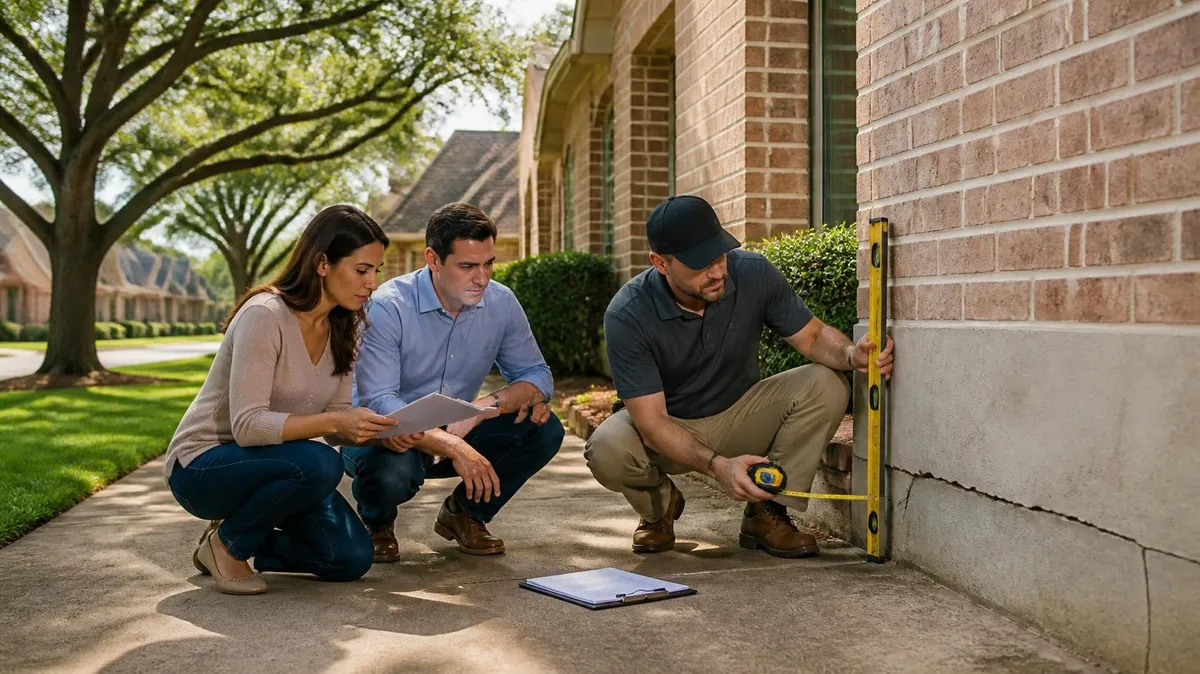
Should You Walk Away From a House With Foundation Problems in Houston?
Should You Walk Away From a House With Foundation Problems in Houston?
You're touring a Houston home and notice a crack.
Then another.
Maybe a door doesn't close quite right.
Or your inspection report mentions possible foundation movement.
Your immediate reaction might be:
"Nope. We're out."
Foundation issues make buyers nervous, especially in the Houston area.
And they absolutely deserve attention.
But seeing a crack or reading the word "foundation" on an inspection report doesn't automatically tell us the severity of the problem—or whether you should buy the house.
Before making a decision, we need better information.
Why Are Foundation Concerns Common in the Houston Area?
Houston-area soil conditions can contribute to foundation movement.
Certain soils can expand and contract as moisture conditions change.
Weather patterns, drainage, vegetation, construction and other property-specific factors can also play a role.
That doesn't mean every Houston house has a foundation problem.
It means foundation condition is something buyers should take seriously.
What Are Possible Signs of Foundation Movement?
Possible observations may include:
Cracks in interior walls
Cracks in exterior brick
Doors that stick
Windows that don't operate properly
Uneven floors
Separation around doors or windows
Cracks in flooring
Gaps around trim
Other visible movement
But here's the important part:
A crack by itself doesn't diagnose the problem.
Some cracks can be cosmetic.
Others may deserve further evaluation.
Can a Home Inspector Tell You If the Foundation Is Bad?
A general home inspector can observe and report visible conditions and may recommend additional evaluation.
But if significant concerns are identified, you may need an appropriate foundation or structural professional to evaluate further.
The goal is to move from:
"This looks scary."
to:
"What is actually happening?"
Get More Information Before Making the Decision
If foundation concerns appear during the inspection, ask questions.
We may want to understand:
What did the inspector observe?
Is further evaluation recommended?
Has the foundation been repaired previously?
Are repair documents available?
Is there a transferable warranty?
Is there evidence of continuing movement?
Are there related plumbing or drainage concerns?
The more information you have, the better decision you can make.
Ask About Previous Foundation Repairs
A home that has had foundation work isn't automatically a home you should avoid.
But I want documentation.
Depending on the situation, ask for available:
Repair invoices
Engineering reports
Foundation company reports
Warranty information
Transfer requirements
Dates of repair
We want to understand what was done and what documentation exists.
Is a Foundation Warranty Valuable?
It can be useful, but don't stop at the word "warranty."
Read it.
Ask:
Is it transferable?
Is there a transfer fee?
What exactly is covered?
What isn't covered?
How long does it last?
Who issued it?
What conditions could affect coverage?
"Lifetime warranty" sounds great in a listing.
The actual document tells you what you're getting.
Could Plumbing Be Involved?
Potentially.
Depending on the type of foundation, movement, repairs and observations, additional plumbing evaluation may sometimes be appropriate.
Foundation and plumbing concerns can become connected in certain situations.
If an inspector or qualified professional recommends further evaluation, don't ignore it.
Drainage Matters Too
Water management around a home can be important.
During the inspection process, pay attention to:
Grading
Gutters
Downspouts
Standing water
Drainage paths
Soil conditions around the structure
Correcting foundation movement without understanding contributing conditions may leave unanswered questions.
How Much Does Foundation Repair Cost?
There isn't one standard price.
Cost depends on factors such as:
Type of foundation
Extent of movement
Repair method
Number and location of repair points
Accessibility
Related damage
Contractor
Don't make a buying decision based on a random online repair estimate.
Get property-specific information when possible.
Can You Negotiate Foundation Repairs?
Potentially.
Depending on your contract, timing and the seller's willingness, foundation concerns may become part of negotiations.
Possible approaches might involve:
Seller completing an agreed repair
Negotiating an allowable seller contribution
Negotiating price
Another agreed solution
Financing and insurance requirements may affect available options.
Should the Seller Repair It Before Closing?
Sometimes that may make sense.
But if significant structural work is involved, I want buyers thinking about more than simply getting a receipt that says "repaired."
Consider:
Who performs the work?
What scope is recommended?
Is an engineer involved when appropriate?
What documentation will be provided?
Is there a warranty?
Is the warranty transferable?
Are related repairs included?
The details matter.
Would You Rather Control the Repair Yourself?
Some buyers would prefer to purchase at appropriately negotiated terms and choose their own contractor after closing.
That can provide more control.
But it also means taking responsibility for the repair, costs and potential surprises.
And your lender or insurer may have requirements that affect whether that strategy is possible.
What If the Seller Won't Negotiate?
Then you have a decision.
Ask yourself:
Do I still want this house at the current price and condition?
The answer may be yes.
It may be no.
Your available options depend on your contract and timing.
That's why discovering and evaluating foundation concerns during the applicable due-diligence period is important.
Does a Foundation Problem Affect Financing?
Potentially.
Significant property-condition issues can affect certain mortgage transactions depending on the loan program and appraisal or underwriting requirements.
If a foundation issue is identified, keep your lender informed.
Don't assume financing will be unaffected.
What About Homeowners Insurance?
Insurance is another conversation worth having.
Ask your insurance professional how the home's condition and prior claims or repairs, when relevant, may affect available coverage.
Don't wait until the day before closing.
Could Foundation Issues Affect Resale?
Future buyers may ask the same questions you're asking now.
That's why documentation matters.
If you're considering purchasing a home with previous foundation repair, think ahead.
Keep:
Reports
Invoices
Engineering documents
Warranty information
Transfer documentation
A documented repair history can be much easier to explain than:
"The previous owner said it was fixed."
When Might Walking Away Make Sense?
There isn't a universal rule.
A buyer might decide the property isn't right for them if, for example:
The scope of the problem exceeds their risk tolerance
Repair costs don't make financial sense
Important questions remain unanswered
Financing creates complications
Seller and buyer can't reach acceptable terms
The buyer simply isn't comfortable assuming the risk
That is a personal and contractual decision.
When Might a Buyer Still Consider the Home?
A buyer might remain interested when they have enough reliable information to understand the issue and are comfortable with the condition, documentation, financing and negotiated terms.
Previous foundation repair does not automatically make a house unbuyable.
The key is understanding what you're buying.
Don't Let Fear Make the Decision
Foundation issues shouldn't be ignored.
But they also shouldn't automatically be treated as:
Crack = run.
Get the inspection.
Get appropriate additional evaluation when needed.
Review available repair history.
Understand the cost.
Talk with your lender and insurance professional.
Then decide.
Houston Buyers Should Pay Attention to the Yard Too
The foundation isn't isolated from the property around it.
When touring homes, pay attention to:
Drainage
Large trees near the structure
Standing water
Soil pulling away from the foundation
Gutter discharge
Grading
These observations don't diagnose structural problems, but they can help identify questions worth asking.
What About New Construction?
Yes, foundation and drainage observations matter with new construction too.
New doesn't mean exempt from inspection.
This is one reason I recommend considering independent inspections during appropriate stages of a new build.
Final Thoughts
Should you walk away from a Houston home because the inspection mentions foundation concerns?
Not automatically.
But don't ignore them either.
The better process is:
Identify → Evaluate → Document → Estimate → Negotiate → Decide
You may discover the concern is manageable.
You may discover it is more extensive than expected.
Either way, you are making the decision with information instead of fear.
And that's exactly what the inspection period is for.
About Marysol Calvillo
I'm a real estate broker helping buyers throughout Katy, Cypress, Hockley, 77084, 77095 and the greater Houston area evaluate homes beyond the pretty kitchen and staged photos.
I help my buyers understand the inspection process, ask better questions and evaluate the complete property before moving forward.
Call to Action
Found a Houston-area home you love but worried about foundation concerns? Don't make the decision based on one crack or one scary sentence in an inspection report. Let's gather the right information, understand your contractual options and determine whether the property still makes sense for you.